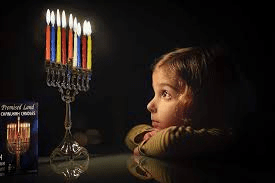
With Chanuka comes the lighting of the candles. We know that these candles are lit in is the darkest time of the year. This year the holiday of lights stands in contrast to a sense of pervasive cultural darkness we have not seen for years. We know it is last for 8 nights. And many of us know the machloket, disagreement, in the Gemara in Shabbat between Beit Shammai and Beit Hillel as for how we should light the Chanuka candles. There we read:
Our Rabbis taught: The precept of Hanukkah [demands] one light for a man and his household; and those who will beautify the mitzvah [kindle] a light for each member [of the household]; and those who really will go all out and beautify the mitzvah,-Beit Shammai maintain: On the first day eight lights are lit and thereafter they are gradually reduced; but Bet Hillel say: On the first day one is lit and thereafter they are progressively increased.
Shabbat 21b
We follow Beit Hillel to increase candles because we should elevate to a higher level in matters of sanctity and not decreased. Amidst this dark time Beit Hillel makes sense, but it is hard to understand the rationale for Beit Shammai. Why would Shammai suggest decreasing the number of candles?

Beit Shammai’s opinion is that the number of lights corresponds to the bulls of the festival of Sukkot: Thirteen were sacrificed on the first day and each succeeding day one fewer was sacrificed (Numbers 29:12–31). What does Sukkot have to do with Chanuka?
There are a number of answers, but the simplest one is as it was recorded in the book of Maccabees. There we read:
And they celebrated the Festival to the Lord for eight days, like the festival of Sukkot, and they remembered the previous days when they celebrated of the festival of Sukkot in the mountains and in the caves, and they went out in the desolation/wilderness, like wild beasts. And they took the willows of the brook and the branches of palm trees, they and sang a song of praise and thanksgiving to the Lord, who gave them courage and salvation to purify the temple of his holiness.
Maccabees II 10:9-10
On a simple level the Maccabees missed Sukkot during their fighting and rebooted the holiday when the war was over and they reclaimed the Temple. This left us with a holiday with Sukkot‘s footprint two months after the fact in the middle of winter. But I think that there is a deeper level to Beit Shammai’s approach for us today.
October 7th will live on in Jewish history as the worst massacre against the Jewish people since the Holocaust. And as horrible as the injury, rape, death and abduction have been for our people, we still have no idea of the long term impact of the war(s) that Hamas has set into motion. The fog of war has obscured our vision.
Chanuka reminds us of the efforts and sacrifices of the Maccabees to fight for our national survival. It cannot be lost on us that October 7th was Simchat Torah. Though it does not seem that this Chanuka is that time, like the Maccabees of old we missed the end of Sukkot and we too seek a way to recover that joy.
The miracle of the Chanuka is not just that the small army beat the larger one all around them, or that a small amount of oil lasted for 8 days, but the miracle of the light is that we can have hope in the darkness. For Beit Hillel this means that we need to always increase that light. But this is also true for Beit Shammai. In their mind they were revisit the joy that they missed during Sukkot. In the future we should be blessed to recover the joy that was taken from us as a nation this last Simchat Torah.
Regardless if we follow Beit Hillel or Beit Shammai hope is hardwired into our tradition. As we are reminded on this Chanuka, may we all bring light to darkness and recover the joy in our lives even when it does not seem possible.
 Said to Myself
Leave a comment