Once confronted by our mortality we are forced to deal with our painful finitude. Woody Allen wrote, “I don’t want to achieve immortality through my work; I want to achieve immortality through not dying. I don’t want to live on in the hearts of my countrymen; I want to live on in my apartment.” For most of us, even if it was possible life eternal in our apartments would not feel meaningful. We strive to live out our dreams in our work , our children, and impact on the larger world.
Here at the end of Genesis in Vayechi, this week’s Torah portion, we see the end of days for Yakov and Yosef. What will be their legacies? Yakov is transported back to be buried in Canaan with his ancestors. He knew they could not go to Canaan to bury him like his father. He made them promise to exhume him when they left Egypt and buried him in the Land of Israel. There we read:
At length, Yosef said to his brothers, “I am about to die. God will surely take notice of you and bring you up from this land to the land promised on oath to Abraham, to Yitzhak and to Yakov.” So Yosef made the sons of Israel swear, saying, “When God has taken notice of you, you shall carry up my bones from here.” Yosef died at the age of one hundred and ten years; and he was embalmed and placed in a coffin in Egypt.
Genesis 50:24-26
Why did Yosef want this to be his legacy? What is the value of being reburied in the Land of Israel?
Back in VaYeshev when Yosef was a young boy before he was sold into slavery by his brothers he told them of his grandiose dreams. There we read:
Now Israel loved Yosef more than all his children, because he was the son of his old age; and he made him a coat of many colors. And when his brethren saw that their father loved him more than all his brethren, they hated him, and could not speak peaceably unto him. And Yosef dreamed a dream, and he told it to his brethren; and they hated him yet the more. And he said unto them: ‘Hear, I pray you, this dream which I have dreamed: for, behold, we were binding sheaves in the field, and, lo, my sheaf arose, and also stood upright; and, behold, your sheaves came round about, and bowed down to my sheaf.’ And his brethren said to him: ‘Shall you indeed reign over us? Or shalt you indeed have dominion over us?’ And they hated him yet the more for his dreams, and for his words. And he dreamed yet another dream, and told it to his brethren, and said: ‘Behold, I have dreamed yet a dream: and, behold, the sun and the moon and eleven stars bowed down to me.’ And he told it to his father, and to his brethren; and his father rebuked him, and said to him: ‘What is this dream that you have dreamed? Shall I and your mother and your brethren indeed come to bow down to thee to the earth?’ And his brethren envied him; but his father kept the saying in mind.
Genesis 37:3-11
While they stop short of fratricide, eventually the brothers’ envy and hatred moved them to sell Yosef into slavery. Why do they hate him so much? Is it all over a coat or is there something more in these dreams? There is something powerful about these dreams of a child.
Years later when the brothers are forced by the famine to come down to Egypt to buy food it seems that Yosef’s dreams come to fruition. Yosef is the second to Pharaoh and he surely has dominion over them when it comes to the sheaves of wheat, but what about the second dream? Do the sun and the moon and eleven stars bow down to him?
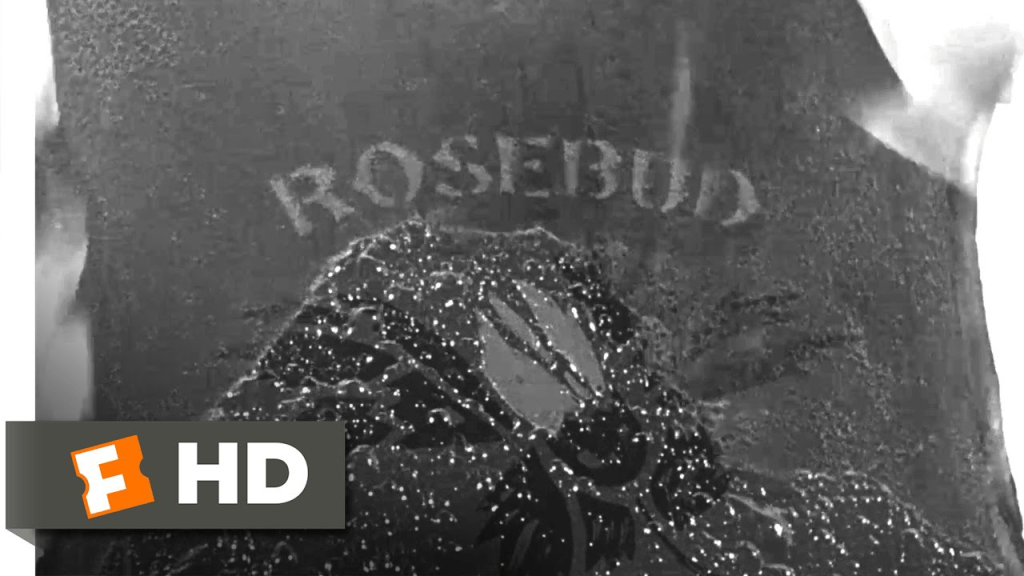
While we see Yosef as a mature man of vision who can look past his brothers’ bad behavior when they come down to Egypt, maybe we are missing something. Yes, manifesting that first dream is a sign that this is all in God’s hand, but in many ways Yosef is still that young child who just wants to live out both of his childhood dreams of being adored, loved, and praised. In this way he is just like Citizen Kane who can have everything in the world, but in the end only wants Rosebud, the simple sign of his parents affection. For Kane and Yosef, their deepest self-actualization is realization of a simple childhood memory.

It will only be when the children of Israel have left Egypt that they will have grown to be a nation as numerous as the stars in heaven that they will be able to bow to Yosef and manifest this second dream. One hundred and thirty nine years after Yosef’s passing, when the Israelites were finally freed from their bondage in Egypt, the time had come to fulfill their promise to their great leader and source of inspiration. Moshe spent three days looking for the casket. Finally, on the night of the Exodus, Moshe turned to Serach, daughter of Asher and niece of Yosef, she alone knew the secret of where the casket was hidden. Serach’s legacy was immortality. She was there for the first time that her family bowed to Yosef when they came to Egypt. She was also there again when they left Egypt. Yosef’s legacy was living out both of his childhood dreams.

 Said to Myself
Leave a comment