In Pikkudei, this week’s Torah portion, we review the accoutrement of the priests, Moshe inspects and certifies the completion of the Mishkan, Moshe blesses the workers, and then the presence of Hashem, the Shechina, descends in a cloud and fills the Mishkan. And with this we close the book of Exodus. Near the end we read:
וַיְכַ֥ס -the cloud covered the Tent of Meeting, and the Presence of the Lord filled the Mishkan.
Exodus 40:34
It is clear that the project of Mishkan, all of the vessels, and all of the special clothes was an enormous undertaking. What is the significance of the cloud covering the Tent of Meeting at the conclusion?
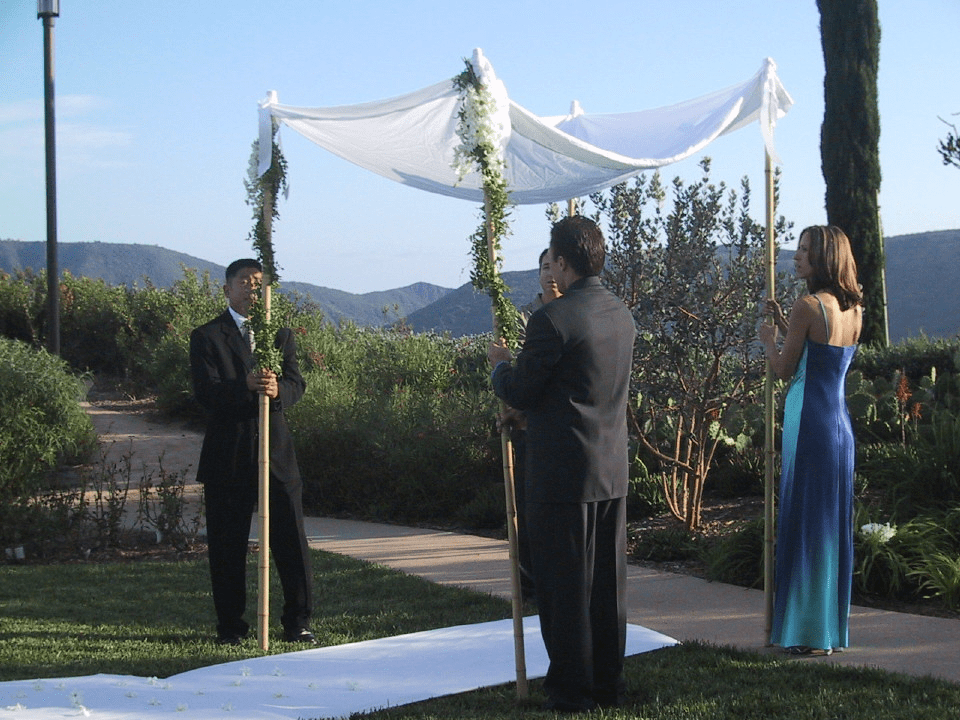
In the Targum they translate וַיְכַ֥ס as וַחֲפָא. I am no philologist, but it is hard for me not to see the work Huppah, wedding canopy in this word.

The Huppah represents a Jewish home symbolized by the cloth canopy and the four poles. Just as a Huppah is open on all four sides, so was the tent of Abraham and Sara open for hospitality. Thus, the Huppah represents hospitality to one’s guests. This “home” initially lacks furniture as a reminder that the basis of a Jewish home is the people within it, not the possessions. In a spiritual sense, the covering of the Huppah represents the presence of God over the covenant of marriage.
The Huppah speaks to the work the couple has done to get to this moment of the wedding at the same time as it speaks to their commitment to the future of their marriage. This is a fitting end to all the trials and travails of the book of Exodus. The cloud covers the Tent of Meeting signifying all of the work the Jewish people have done to get to this point and all they will need to keep doing to maintain this relationship to each other and God.
This reminds me of the 1998 song Closing Time by Semisonic which is attributed to Roman Stoic philosopher Seneca. “Every new beginning comes from some other beginning’s end.” This cloud covering , just like a Huppah, represents the end of one stage of relationship and the beginning of something wonderful and new.
 Said to Myself
Leave a comment