Yesterday was Purim. I usually love this holiday, but this year felt a bit different. It was weird celebrating our salvation at time when we are feeling so vulnerable. When in our lives have we experienced so much hatred? Both in Israel and around the world it seems normative to be antisemitic.
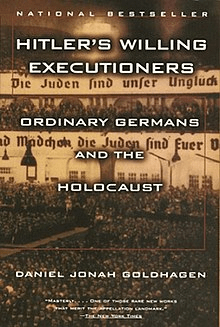
For the last period of our time in our Golden Age of North American Jewish life it has been hard to relate to this commemoration of our survival in the light of collective thriving. Now, since October 7th, Purim is strangely relevant again. While we like to make a lot of noise about Haman, his wife Zeresh, and their children as the villains in this story, this glosses over the thousands of willing executioners who were all too happy to eradicate us.
Similarly, in retrospect October 7th has unleashed droves of other willing executioners who are making it clear that their socially acceptable Anti-Zionism was just antisemitism with a mask.
It is noteworthy that today was Shushan Purim in Jerusalem. In cities that were protected by a surrounding wall at the time of Joshua, Purim is celebrated on the 15th of the month of Adar since fighting in the walled city of Shushan continued through the 14th. As we see in the Mishna:
Cities [kerakin] that have been surrounded by a wall since the days of Joshua, son of Nun, read the Megilla on the fifteenth of Adar, whereas villages and large towns that have not been walled since the days of Joshua, son of Nun, read it on the fourteenth.
Megillah 2a
Questions abound from the Megillah and this Mishna. Why was it so easy to put down the antisemitism in the countryside and the villages? Why did it take longer to suppress this antisemitism in the City of Shushan? Why does the Mishna expand from Shushan to any other city? While I will not deal with it today, why does the Mishna assume that the cut off time for being a city for the sake of Shushan Purim fixed to the days of Joshua in the bible that predates the Megillah by 9 centuries?
I have found something interesting to reflect on the differences between rural versus urban settings today. When I think about the diversity of the current expressions of antisemitism on the right and on the left. What are our assumptions of persistence of right wing antisemitism? How does that align to our assumptions of the rural life? What is the novelty of the rise of antisemitism on the left? How does that align to our assumptions of our the elite in our cities? While I do not feel that this round of antisemitism to the right or left is going to be suppressed so quickly, I am curious to see if it takes longer in our liberal cities.
This resonates with something the Elie Wiesel. wrote in Jews of Silence in 1965 when he wrote, “In Russia they hated the Jews because they were not Russian enough, and in the other Soviet states they hated the Jews because they were too Russian.”
This Mishna also helps us reflect on the different experience of Shushan Purim as distinct from Purim. Different experiences of trauma demanded a different holiday. This is spot on what is happening right now with our community. For many of us in the Diaspora who are plugged into the war it is hard, but for our family and friends in Israel it is still very much October 7th. In the case of Purim and Shushan Purim our calendar represents our different experiences of time. Time will tell how we commemorate October 7th in Israel and beyond.
 Said to Myself
Leave a comment