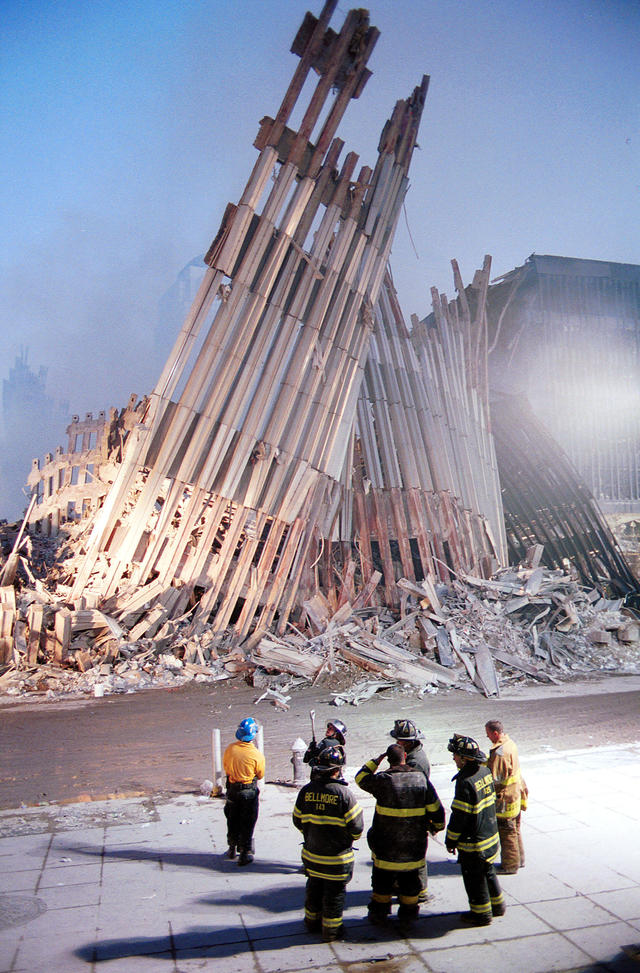
Last week we commemorated the anniversary of 9/11. This was a transformational day for me personally. A the time of the event I was learning in yeshivah and living in Manhattan. There are so many memories I have from that time it is hard to imagine communicating them to someone who has not experienced it. It is shocking to realize that there are people in their 20s having their own children who were either not even alive when 9/11 happened or were too young to have any memories of it. Similarly I reflect back on this last year since October 7th. I know it was a big event for me personally and transformational for some of my children. But, what about their children? I pause to ask, how will we communicate the nature and gravity of these events to the next generation?


I was thinking about this when reading Ki Tavo, this week’s Torah portion. There we read about the ritual of Bikkurim, bringing the first fruit on Shavuot to the Temple. About this we read:
And you shall come to the priest that shall be in those days, and say to him: ‘I profess this day unto the Lord your God, that I am come unto the land which the Lord swore unto our fathers to give us.’ And the priest shall take the basket out of thy hand, and set it down before the altar of the Lord your God. And you shall speak and say before the Lord your God: ‘A wandering Aramean was my father, and he went down into Egypt, and sojourned there, few in number; and he became there a nation, great, mighty, and populous. And the Egyptians dealt ill with us, and afflicted us, and laid upon us hard bondage. And we cried unto the Lord, the God of our fathers, and the Lord heard our voice, and saw our affliction, and our toil, and our oppression. And the Lord brought us forth out of Egypt with a mighty hand, and with an outstretched arm, and with great terribleness, and with signs, and with wonders. ( Deuteronom7 26:3-8 )
The generation who entered the land of Israel did not have first hand experience of the slavery in Egypt and redemption from slavery. The ritual of Bikkurim was a means for this next generation to preserve a memory they never had. It is interesting that this ritual had a script. We learn later that in order to make the script more accessible the priest would say it and the person coming would repeat it.
How will we share our memories with the next generation? I think we can point out a few elements of the ritual of Bikkurim. Like the priest repeating the words, we need to find ways to make it more accessible to more people. We need to build this difficult memory into an existing gathering. It could not hurt to make sure that this event itself is festive and not let the next generation get stuck in the gloom. We also need to find the balance between the script that we so urgently need them to say and leaving space for the next generation to find their own voice in history. The next generation needs to find a way to breathe their own imagination into the ritual in order create their own memories around the ritual.
The script from this Bikkurim ritual is the foundation for the Haggadah. The Haggadah is the model of balance between tradition and innovation in order to keep memories vital throughout history. In every generation we are to see ourselves as having been redeemed from slavery in our own Egypt. I would venture to say the Haggadah is the most rewritten book in history. In order to get my children and eventually their children to connect to Jewish History, 9/11, or October 7th we need to give them the space to explore what these events mean to them in their lives without the full burden of what it has meant in our lives. Rituals help preserve a dynamic tension between tradition and innovation. Without this tension we will break the chain linking our past to our future and our future to our past.
 Said to Myself
Leave a comment