When we think about the people we love in our lives, how close is too close? When it comes to my children, we have one in college, another on a gap year in Jerusalem, a 10th grade daughter who wants to differentiate , and our 4th grader complains that I hug her too much. When it comes to my parents, they have both passed away. This leaves my siblings. Since my parents passing we have been adjusting how we get along. When we love people we want to be close to them, but I also know that we all need our space. What is the right distance?
I was thinking about this in preparation for Rosh HaShanah this year. On the first day we read about Hagar and Yishmael’s exile. We read:
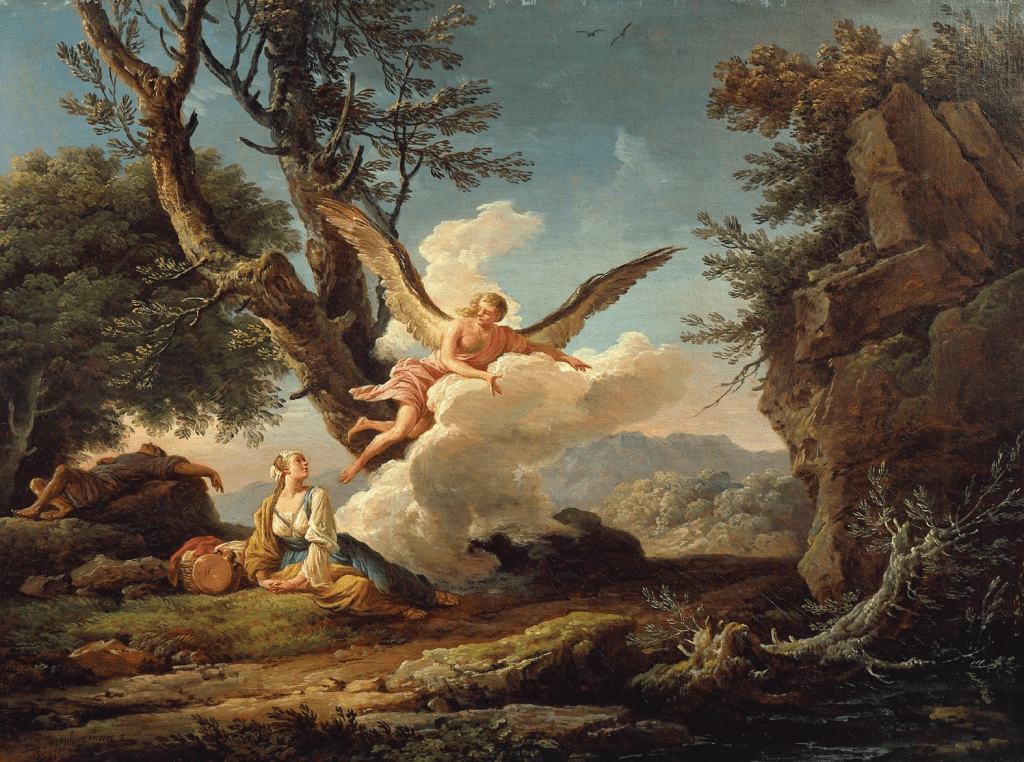
And Abraham arose early in the morning, and he took bread and a leather pouch of water, and he gave [them] to Hagar, he placed [them] on her shoulder, and the child, and he sent her away; and she went and wandered in the desert of Be’er Sheba. And the water was depleted from the leather pouch, and she cast the child under one of the bushes. And she went and sat down מִנֶּ֗גֶד הַרְחֵק֙- from afar, at about the distance of two bowshots, for she said, “Let me not see the child’s death.” And she sat from afar, and she raised her voice and wept.(Genesis 21: 14-16)

The simple reading of this is that Yishmael is about to die and Hagar could not bear to watch this happen. And at the same time she could not totally desert him. So, Hagar sits at a distance to watch, but not too close. Yishmael was about to perish from thirst when an angel “opened Hagar’s eyes” and showed her a well that was there the whole time to give Yishmael water. Yishmael is saved, but it seems sad, if not a bit pathetic.
On one level this “eye-opening” story is all to set the juxtaposition with Abraham’s “eye-opening” experience we read about on the second day of Rosh Hashana with the Binding of Yitzhak. But I do not want to skip over the Torah’s depiction of Hagar standing there at distance as her son was about to die of thirst in desert.
This image of Yishmael about to die under the watchful eyes of Hagar sitting at distance draws an interesting juxtaposition to another image of a young boy in peril being watched. When the children of Israel were slaves in Egypt a new King rose up who did not remember how Yosef had saved them. This new king looked to limit the risk of a slave uprising by killing all of the male children. As the story continues Moshe is born in hiding to two people from the tribe of Levi. But when they cannot keep the secret anymore, they resolve to make a Hail-Mary play to save the child by put him in a basket to see what would happen to him. There we read:
And his sister stationed herself מֵרָחֹ֑ק- at a distance, to learn what would befall him. (Exodus 2:4)

Just as Hagar was watching Yishmael from afar, Miriam was hanging out in the bullrushes “at a distance” to see what would happen. Like Yishmael, Moshe is saved, but what do we see in their respective mother/sister hanging out at distance?
Where Hagar was being pathetic, Miriam was being hopeful. Miriam is depicted as a prophetess. In the Gemara we learn:
But once Moses was cast into the river, her father arose and rapped her on the head, saying to her: My daughter, where is your prophecy now, as it looked as though the young Moses would soon meet his end. This is the meaning of that which is written with regard to Miriam’s watching Moses in the river: “And his sister stood at a distance to know what would be done to him” (Exodus 2:4), i.e., to know what would be with the end of her prophecy, as she had prophesied that her brother was destined to be the savior of the Jewish people. (Megillah 14a)
I like to think that Hagar and Miriam, were standing at the same distance, but it is very different intentions. Where Hagar was moving away from tragedy of the death of her son, Miriam was ready to jump on the opportunity of Pharoah’s daughter discovering her little brother. How might we understand this respective vectors?
Interestingly this aligns to the thinking of the late Rabbi Joseph Soloveitchik z’l at outlined in Kol Dodi Dofek. There he outlines what he called the brit ye’ud (the covenant of destiny) and brit goral (the covenant of fate). Destiny is what we do. Fate is what happens to us. One is a code of action, halachah. The other is a form of imagination, the story we tell ourselves as to who we are and where we belong. Hagar’s distance speaks of the covenant of fate. Hagar cannot run away or watch what is unfolding to her son Yishmael. Miriam’s distance speaks of the covenant of destiny. Miriam is eagerly looking out for the prophetic vision that will unfold for her brother Moshe and the salvation that will come from his life. While both distances speak of commitment and a bond, Miriam’s alone speaks of a hope for the future.
Looking back on this past year, the Jewish people had experiences a metric ton of crap. Look forward to this coming year, what will happen? So it might not be our “distance” but rather our vector. Are we fated for more pain and suffering or are we destined for something better and brighter?
I would like to lean into hope for 5785. But how could I say this. There is so much counterevidence. Where is the hope coming from? None of us are prophets like Miriam. But we, the Jewish People, are identified with prophecy: “Even if they [Israel] are not prophets, they are [nevertheless] the sons of prophets” (Pesachim 66b). The secret to our resilience as people is our picking Miriam’s distance over Hagar’s. We pick a destiny is salvation over a fate of suffering every time. This hope is born out of our vigilance and willingness to jump at any opportunity that floats our way.
Going back to the original question, what is the right distance with those we love? We need to stand close, but not too close. We need to hold space for them, but even more so we need to hold hope.
Shanah Tova U’Metuka– May you have a great new year filled with hope.

 Said to Myself
Leave a comment