
When I was in Rabbinical school I interned at Ramat Orah in Manhatan. There I gave a whole series of classes where the congregants could ask anything they wanted and I would prepare traditional sources to help us get to answers. The congregants in my class were very smart and well read, just not in Judaism. This combination allowed them to ask profound questions that most of us overlook because they seem so simple and obvious. One of questions was why we cover our eyes when we say the Shma. I ended up giving three or four classes on this topic. I have to say that really thought I had exhausted the topic until recently. But first I need to share a story with you.
Before Rosh HaShana my friend Rabbi Yossi Polack gave me a copy of One Day in October. It introduces us to forty real-life Israeli heroes from that day, in their own words or in the words of their next of kin. All forty stories take place within the same twenty-four-hour period, in the same patch of beautiful, broken, blood-soaked land. These heroes are unforgettable, their stories inconceivable. While very painful to read, I loved the book. Each story was its own gut punch.
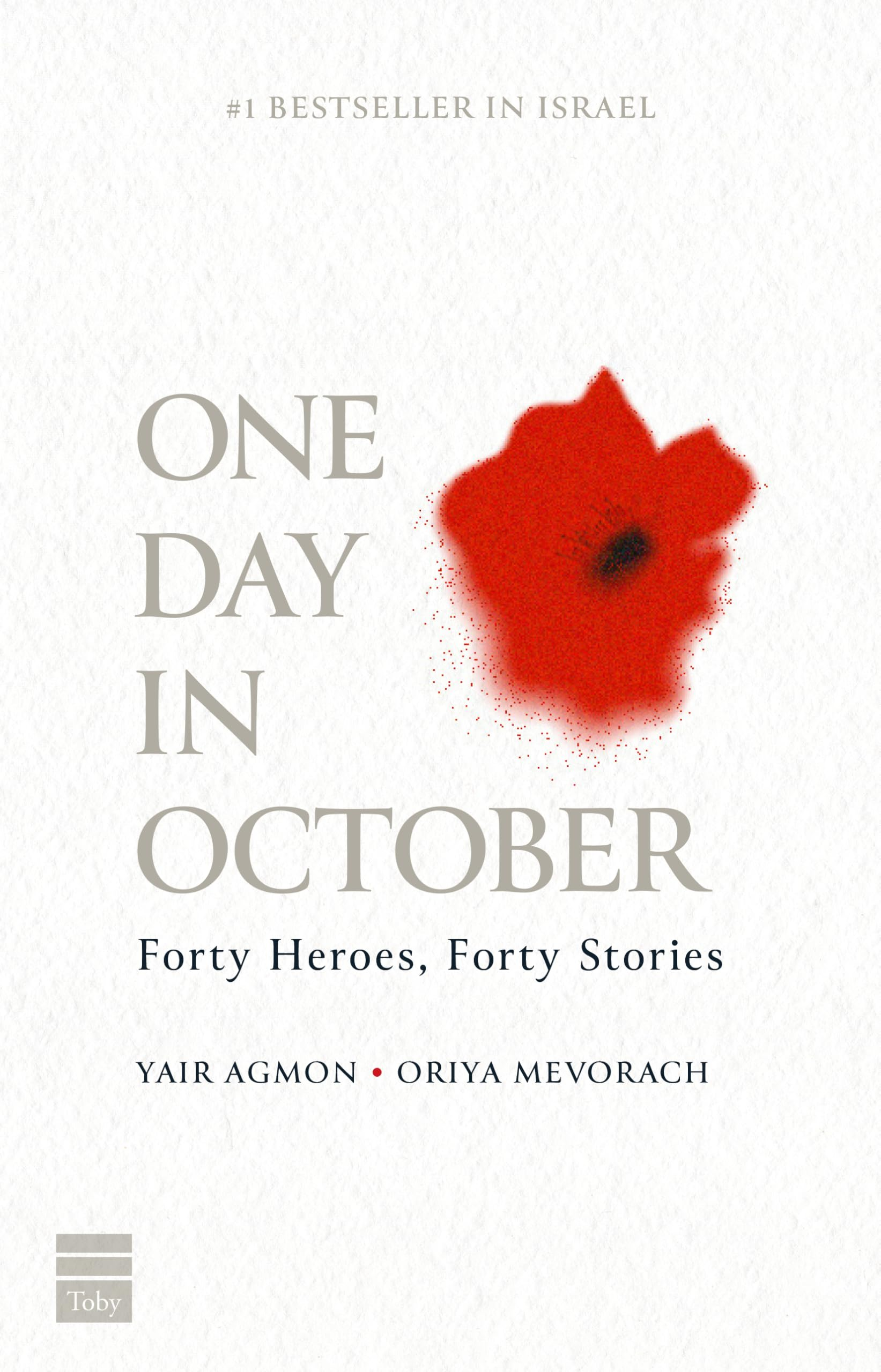
I saved the end of the book to read on the first yahrzeit on Shimini Atzeret/Simchat Torah. That is when I read the story of Yossi Landau. He is a Sandzer Hassid who is the head of ZAKA in the south. There he tells the story of his showing up to Sderot as Hamas was still attacking. Yossi was going around trying to find injured people to rescue and put the dead bodies and body parts into body bags to treat them with respect. He got there just four after the attack started so it was still in the middle of the throws of war when he was wandering around Sderot. It is just harrowing work. Yossi tells how he found a car with a couple in the front seats. He opened the door checking for signs of life only to discover that they had been killed. In the book we read:
The sun is beating down on the hot car, and we know that every minute counts. Then we hear a little girl crying! The girl is still inside the car, under the seat! That was my first slap in the face on October 7th; that was something nobody prepared me for, something I wasn’t prepared for. The girl is sobbing, sobbing, and I say to her, ” We’ve come to save you,” and she asks, ” Are you one of us?” and I said,” Yes.” And she asked me for a sign, to know that I’m not Hamas, so I say the Shema to her with tears in my eyes, ” Hear, O Israel , the Lord is our God, the Lord is One.” She came out from under the seat, and when I look at her all I see is my own granddaughter, she is about their age, and I almost passed out right there; I almost collapsed and broke down on the spot, but I said to myself, ” This isn’t the time for that.” I covered her eyes so that she wouldn’t see her parents, and I handed her over to some police officer who was in the area. And I said to him, ” Please take her, Take care of her, because as long as she’s here I can’t bear to keep going.” ( One Day in October p 344)
I was thinking about Yossi and covering the child’s eyes when reading Toldot, this week’s Torah portion. There we read:
When Isaac was old and his eyes were too dim to see, he called his older son Esau and said to him, “My son.” He answered, “Here I am.” (Genesis 27:1)
Here we learn that Yitzchak has gone blind. But how did he lose his sight? Rashi quoting the Midrash offers three explanations. The first is that he went blind from the smoke from offerings Esav’s wives who were using fire to worship their idols. This is due to proximity of these two ideas in the text. The last rationale offered by Rashi is that this blindness was needed to make it possible for Yaakov to get the blessing instead of his brother Esav. The first explains where the story is coming from and the other where it is going to, but the middle one seems most interesting to me. Bringing a midrash Rashi writes:
When Yitzchak was bound upon the altar and his father was about to slay him, at that very moment the heavens opened, the ministering angels saw it and wept, and their tears flowed and fell upon Yitzchak’s eyes which thus became dim (Genesis Rabbah 65:10)
To the Midrash, Yitzchak’s “blindness” was not the result of moving the plot along or even the natural aging. Rather his eyes going dim was a direct result of Yitzchak’s all-consuming religious experience of the Akedah.
How could any child survive the seeing their parent trying to kill them? Similarly, in the case of the young girl in the car in Sderot, how could any child survive seeing their parents killed in cold blood? Yossi Landau, our hero from October 7th, covered her eyes to spare her from going blind like Yitzchak. Then I flash back to my students at Ramath Orah. Maybe we cover our eyes when we say the Shma to spare ourselves the pain of this world. We know that the world is harsh and it is hard to hold on to our faith in light of what we see. We need to cover our own eyes, ” because as long as she’s here I can’t bear to keep going”. In this sense, covering our eyes when we say the Shma is less of an act of faith in God. We cover our eyes as a way to keep doing what we need to do to fix this broken world.
 Said to Myself
Leave a comment