Recently I went to a shiva for a friend who just lost their second parent a very short period of time. I have been to many a Shiva in my days, but this one hit different for me. When both my parents were alive even if my mother’s health was not good I took comfort that they had each other. When my father passed away most of our attention went to supporting my mother. She needed us. Now that they are both gone, I need not worry about them. But it also makes it easy to not deal with their being gone. I do not always think about being an orphan, but being at this shiva brought that to the surface.
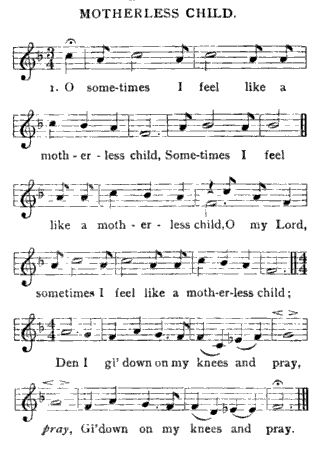
Since then I keep thinking about Shlomo Gronich & The Sheba Choir’s cover of the classic Negro spiritual “Motherless Child”
Most people think that this song was composed by the children of slaves who were sold to other owners and being raised without their parents. There is something haunting about a group of black Ethiopian immigrant children singing : “Sometimes I feel like a motherless child, long way from home”.
Commonly heard during the Civil rights movement in the United States, “Motherless Child” has many variations and has been recorded widely. Mahalia Jackson has one of the most classic versions:
The song is an expression of pain and despair as the singer compares their hopelessness to that of a child who has been torn from their parents. Under one interpretation, the repetition of the word “sometimes” offers a measure of hope, as it suggests that at least “sometimes” the singer does not feel like a motherless child.
It is easy to imagine that the young Moshe who we meet in Shmot, this week’s Torah portion, often had this feeling. To save him from being killed he was sent away from his mother. While he might have been nursed by his biological mother, he was raised in the house of the oppressor. We clearly see this connection to his distant mother when he comes to rescue of the Israelite slave who was suffering under the whip of the Egyptian task master. But then he needs to run away. He leaves his Egyptian mother as well. The he finds himself working for Yitro as a shepherd. We see his empathy when he runs after the lamb which was separated from the flock. It is here that he discovers God in the Burning Bush. His running after the motherless kid a long way from homes is is the foundation of revelation.
I was thinking about this when talk to our son Yishama who is spending the year learning in yeshivah in Israel. He is having a transformational year learning Torah and about himself. He has found a sense of purpose and wants to make aliyah in the fall. It fills me with all the feels. We are all very happy for him. How many 18 year-olds can clearly say who they want to be and what they want to do with their lives? And at the same time I miss him. I feel joy, sadness, jealousy, satisfaction, and fear. It is interesting to hear from him frustration that we are not more available to him. Despite finding a new home, he is homesick and feeling a long way from our home. I am thrilled that Adina is going to visit him this coming week. So even if he is long way from home, he need not feel like a motherless child.
There is no doubt that I have pulled myself out of the sadness in thinking about my parents being absent from my life by pouring myself into the lives of my children. I am just trying to fill a parent shaped hole in our soul. It might not fit perfectly, but it does a great job. Maybe this also explains why Moshe was so motivated to work tirelessly for the Jewish people. He always carried with him that feeling that was was a motherless child a long way from home.
*Related Post – Motherless Child: Esther And Our Nation
 Said to Myself
Leave a comment