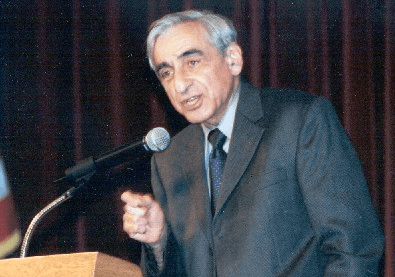
In the aftermath of October 7th I have been thinking a lot about the concept of “dirty hands,” particularly as discussed by political theorist Michael Walzer. In this he addresses the ethical dilemmas faced by political leaders. The “dirty hands” problem arises when political leaders must choose between morally questionable actions and achieving crucial political goals, such as protecting the community. It acknowledges that sometimes, “doing the right thing” in politics may require actions that are morally wrong. Walzer argued that in “supreme emergencies,” leaders might be obligated to “dirty their hands” by authorizing immoral actions to save the community. He emphasized that even when justified, these actions remain morally problematic, and the leader should feel a sense of guilt or remorse. It’s not simply about choosing the lesser of two evils; it’s about recognizing that even the “necessary” evil remains evil. Walzer’s view includes that a moral politician is one who has “dirty hands”, acknowledges it, and is troubled by it.
I was thinking about Walzer’s “dirty hands” dilemma when reading Tetzave, this week’s Torah portion. There we read:
You shall further command the Children of Israel that they shall take for you shemen zakh, pure oil,crushed olives for illumination, to light the lamp continually. (Exodus 27:20)
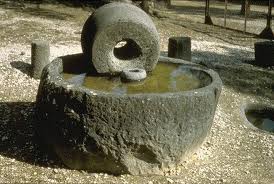
What is shemen zakh, this so-called pure oil? Citing a Gemara in Menachot, Rashi explains that there are three processes in making oil. First the olives are crushed or cracked, then pounded, and then milled. This special oil that the Torah requires for use in the Menorah is only the first drop resulting from the initial process. By limiting the collection to the initial process you can be sure that the oil was free of any particles from the seed that was broken in the subsequent processes. This commandment, coming from Moshe, seems to set a high demand on the clarity of the oil. But this process of producing this shemen zakh, seems rather wasteful. You are just taking a drop from each olive and that is all. You might argue that the importance of its use in the Menorah might justify the appearance of being wasteful. Or you might say the exact opposite: since this oil is being used for the highest purpose we should avoid any appearance of waste. In fact, nothing is wasted, the olives are not thrown away; the olives go through another process and the oil is used in the meal offerings. Is there a deeper meaning?
The concept of “dirty hands” highlights the tension between personal morality and political responsibility. Walzer points out that political leaders often face the difficult reality where moral purity may be incompatible with effective governance. Just as we say you cannot make am omelet with cracking some eggs, you would say that you cannot make olive oil without pressing some olives.
But still, shemen zakh is a symbol of purity at the center of our religious lives. Religion should never be used to excuse or justify our “dirty hands”, but we need to understand that “dirty hands” are necessary, but radically insufficient. How might religion be an aspiration beyond or even above the spheres of governance or politics? How might we save space by not pressing too hard and strive for purity even in a world where we know we need to get our hands dirty?
- Similar Post- Pure in Process
 Said to Myself
Leave a comment