Eikev, this week’s Torah portion, starts off:
And if you Eikev– עֵ֣קֶב- do obey these rules and observe them carefully, your God will maintain faithfully for you the covenant made on oath with your fathers ( Deuteronomy 7:12)
The Torah opens up with a simple proposition. If we keep God’s rules God will uphold the covenant of our ancestors with us. But what of this language of עֵ֣קֶב? On this Rashi comments:
The Hebrew text may be taken to signify if you will hear the heel, Eikev- עקב — If, even the lighter commands which a person usually treads on with his heels (i.e. which a person is inclined to treat lightly), you will hearken to,
Rules that we are to observe might be at risk of being tread on, so we need to be careful in terms of our observance. This seems to be resonant with the expression of calling someone a “real heel”. This is a derogatory term for a contemptible person which likely originates from the idea of something being at the “bottom” or “low point,” similar to the literal heel of a foot or shoe. This sense of being “down at the heel” (meaning run down or in bad condition) further reinforces the negative connotation. But there has got to be more to this Eikev– עקב. How could “obey” and “heel” mean the same thing?
This is interesting in the context of Rivka’s struggle to have children that we read about in Toldot. When she is blessed and conceives it is a turbulent pregnancy. Rivka seeks out an oracle to understand her situation. There she learned:
Two nations are in your womb, and two peoples shall be separated from thy bowels; and the one people shall be stronger than the other people; and the elder shall serve the younger. ( Genesis 25:23)
And soon after the twins are born. Esav is born first and close at his heel is Yaakov- יַעֲקֹב, who is named from holding on to his brother’s foot ekev-עקב. Esav the older one is favored by Yitzhak while the younger Yaakov is Rivka’s favorite. Rivka is instrumental in helping Yaakov fulfil the prophecy of the oracle, best his older brother, and dupe his blinded father Yitzhak into giving Yaakov the blessing.
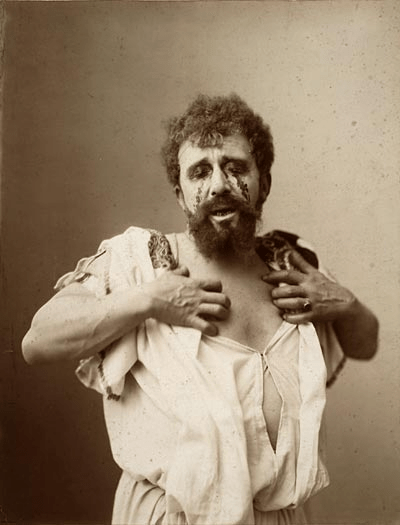
It is shocking to realize the connections between this story from Toldot and the story of Oedipus. Oedipus was the son of Laius and Jocasta, king and queen of Thebes. After having been married some time without children, his parents consulted the Oracle of Apollo at Delphi about being barren. The Oracle prophesied that if Jocasta should have a son, the son would kill her husband and marry her. In an attempt to prevent this prophecy’s fulfillment, when Jocasta indeed bore a son, Laius had his ankles pinned together so that he could not crawl, and gave the boy to a servant to leave him to die on a mountain. As fate would have it the sympathetic servant passed the baby onto a shepherd from Corinth and then to another shepherd. Eventually passed on to another king and queen who were barren. Eventually Oedipus learns about the prophecy. Trying to evade it in turn he actually fulfills his destiny. When he finally learns this horrible tragedy he blinds himself.

So lets start connecting the dots between Toldot and the Oedipus. There is the obvious interest in the blindness of Yitzhak and Oedipus, the love of the mother, the fertility issues, and role of the oracles’ prophecy. The most obvious connection between the stories is the names of the main characters. Oedipus is named after the swelling from the injuries to his feet and ankles. The word edema is from this same Greek word for swelling: οἴδημα, or oedēma. “Pous” meaning foot is as we know from Octopus. This is the mark of his parents trying to evade the prophecy. In our story Yakov named because he was holding on to ekev– heel of his brother. It seems from the beginning the younger was trying to rule over the elder in trying to fulfil the prophecy.
There are many more interesting parallels between the stories, but the compelling part is where they diverge. Prophecy is a foretelling of something that is going to happen. If it is going to happen there is nothing you can do to stop it. Here is where the stories are at odds. In trying to be good Oedipus does horrible things. He turns into a real heel. Yaakov does some very bad things ultimately to be a pretty upstanding guy. Yaakov is no “heel”. Where everyone in the story of Oedipus is running from fate, Rebecca and Yaakov are both active in trying fulfill his destiny.
Here we find a deep between Yaakov, Ekev– foot, and Eikev– obey. While Yaakov might do some things that look bad, ultimately his goal is to “obey” and fulfil his destiny.
*related post- At Least He Loves His Mother
 Said to Myself
Leave a comment