As learn in Perkei Avot:
Torah is greater than priesthood and kingship, because kingship is acquired with thirty attributes, priesthood with twenty-eight and Torah is acquired with forty-eight ( Avot 6:5)
The implications from here is that Torah learning is greater than priesthood and kingship because there are more ways to acquire it. This does not make sense when it comes to simple economics. The Law of Scarcity states that a good or service becomes more valuable when it is in limited supply relative to the demand for it, driving up its price and making consumers more motivated to acquire it, the value of something would go down. It would stand to reason that Torah might be less valuable because there are more ways to acquire it. But, clearly this is not the case. Even from a superficial level, is it seems that Torah is greater because unlike the priesthood or royalty it is not a status that can be inherited. That is to say that the Torah is our inheritance as the Jewish people, but you will always have to put the effort into to acquire it. But, none of this is really the point. Beyond the 48 ways listed in the mishnah, what does it mean to “acquire Torah”?
I was thinking about this question on Sunday when I heard the sad news of the passing of Rabbi David Ebner z”l. I had the honor to learn from Rabbi Ebner in the gap year at Yeshivat HaMivtar between my freshmen and sophomore years in college and then again for close to two years when I came back to Yeshiva from Minsk. When I graduated high school I wanted to learn in Israel, but I could not find a place for me to learn seriously at the time that worked in my post-movement framework. And when I went to Columbia fell in love with the Common Core and really felt bereft that I did not have the experience of learning Torah first. At the time it felt like I was having dessert before dinner. So, I went to HaMivtar. While I have been living the life of an observant Jew for years, it was there that I first allowed myself to live within an Orthodox framework. Besides the skills and literacy, during those years I cultivated a deep love of learning.

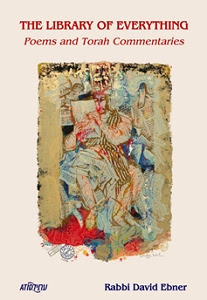
Looking back on it now, I remember Rabbi David Ebner z’l’s weekly mussar shiur with particular fondness. This slot after lunch did not have any particular limitation and it was the perfect canvas for Rabbi Ebner’s unique art. It allowed him to build something magical from palate of the entire Beit Midrash with its Halacha, Gemara, Midrash, Rambam, and Hassidut, world of poetry and art, psychology, sociology, stories from all over the world, and his general sage counsel. He was the master librarian taking us on a tour of the Library of Everything. I looked forward to this class all week. It was the moral development I needed mixed in with the theater and entertainment I wanted.
These classes would always follow a similar traditional form. He would explore some story or traditional text and present a problem. He would go on to develop this problem through a series of texts reaching a climax which would suddenly open up everything. He would then follow a chiastic structure to move back to the original problem to resolve it. It was always amazing to see him bring unlikely sources into conversation together. I could share many insights that he shared from those classes, but that is not what comes to mind. There is one throw away line of his that I have recalled from that first year in Yeshivah that was transformative for me.
Rabbi Ebner opened up one of his classic mussar sichot by saying with a particularly yeshivish twang, ” the other day I was doing hazara on Catcher in the Rye.” There he was in the Beit midrash starting a classical conversation about morality in the context of the ancient Jewish wisdom tradition saying that he just reread J. D. Salinger‘ s 1951 classic. I remember the feeling of seeing and being seen as if for the first time. Rabbi Ebner wanted to open up our hearts and minds to the world of the Beit Midrash, but not force us to abandon the outside world. Even better, with his wily smile Rabbi Ebner was inviting Salinger in to play with us in the Beit Midrash. I have a visceral memory of pushing all of my chips in at that moment. I wanted to learn Torah and everything else for the rest of my life. In seeking truth, everything was invited in and this included all of our personal complexities. I was all in. In retrospect, this was my first moment of acquiring Torah.

In many ways I have spent much of the 33 years since that moment trying to acquire this Torah of radical integration. In Rabbi Ebner’s poem” The Library of Everything” he wrote:
In heaven (or hell) there is
a Library of Everything:
the proof for Fermat’s Last Theorem,
who was on the grassy knoll,
was Mantle better than Mays,
the Grant Unified Theory

How do we strive to know the Torah, appreciate beauty in all forms, and show up with deep passion and compassion? This was Rabbi Ebner’s example. When it came to acquiring Torah, if he was selling it, I was buying it. His was a Torah of Everything. I am confident he is enjoying his time in heaven filled with the “real truth”. Rabbi Ebner’s memory should be for a blessing and an example.
 Said to Myself
Leave a comment