
I remember always being frustrated in math class when the teacher wanted me to show my work. My children are in the same boat. If we can do the work in our head, why do we need to show our work?
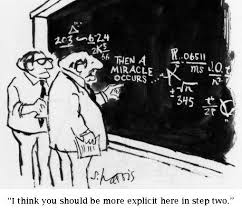
If we do not show our work, it is binary. We are either right or wrong. Teachers ask us to show our work so they can pinpoint our thought process, identify mistakes, award partial credit, prevent cheating, and provide more specific feedback. Showing our work also helps you develop critical thinking skills, learn from errors, and practice communicating your ideas clearly, which are skills that transfer to other subjects and real-life situations.
Is this limited to math class? What about other classes? What about our lives beyond school? What about our very character?
In his classicThe Picture of Dorian Gray Oscar Wilde tells the story of a portrait painted by Basil Hallward, a friend of Dorian Gray’s who is infatuated with Dorian’s beauty. Through Basil, Dorian meets Lord Henry Wotton and is soon enthralled by the aristocrat’s hedonistic worldview: that beauty and sensual fulfillment are the only things worth pursuing in life. Newly understanding that his beauty will fade, Dorian expresses the desire to sell his soul, to ensure that the picture, rather than he, will age and fade. The wish is granted, and Dorian pursues a libertine life of varied amoral experiences while staying young and beautiful; all the while, his portrait ages and visually records every one of Dorian’s sins.

There Wilde writes, “Knowledge would be fatal. It is the uncertainty that charms one. A mist makes things wonderful.” This speaks to an epistemological truth that we thrive on the uncertainty. Truly looking in the mirror and not a magical portrait could be painful and difficult. Knowing the truth might kill us, but it is really the only way for us to “show our work”.
None of us have Wilde’s perfect portrait, but tonight all of us will get the mirror of Yom Kippur. It need not be a simple question of getting the answer right or wrong. It is not just a pass fail reality. If we allow ourselves the time and space to take account of who we have been and ponder who we want to be, this will be a powerful Yom Kippur. In her book Daring Greatly, Brené Brown, my vulnerability Rebbe, teaches, “Courage starts with showing up and letting ourselves be seen.” The Teshuva process does not demand perfection, only progress. We need to show up and risk being vulnerable. Did I just misread the directions? Did I forget to study? What were my errors conceptual or computational? How can I improve for next year? If we “show our work” we can improve.
On Rosh HaShana we hope to be written and on Yom Kippur sealed in the Book of Life. Maybe the High Holidays are a just a way for God to give us a glimpse into God’s work.
Gmar Chatima Tova
 Said to Myself
Leave a comment