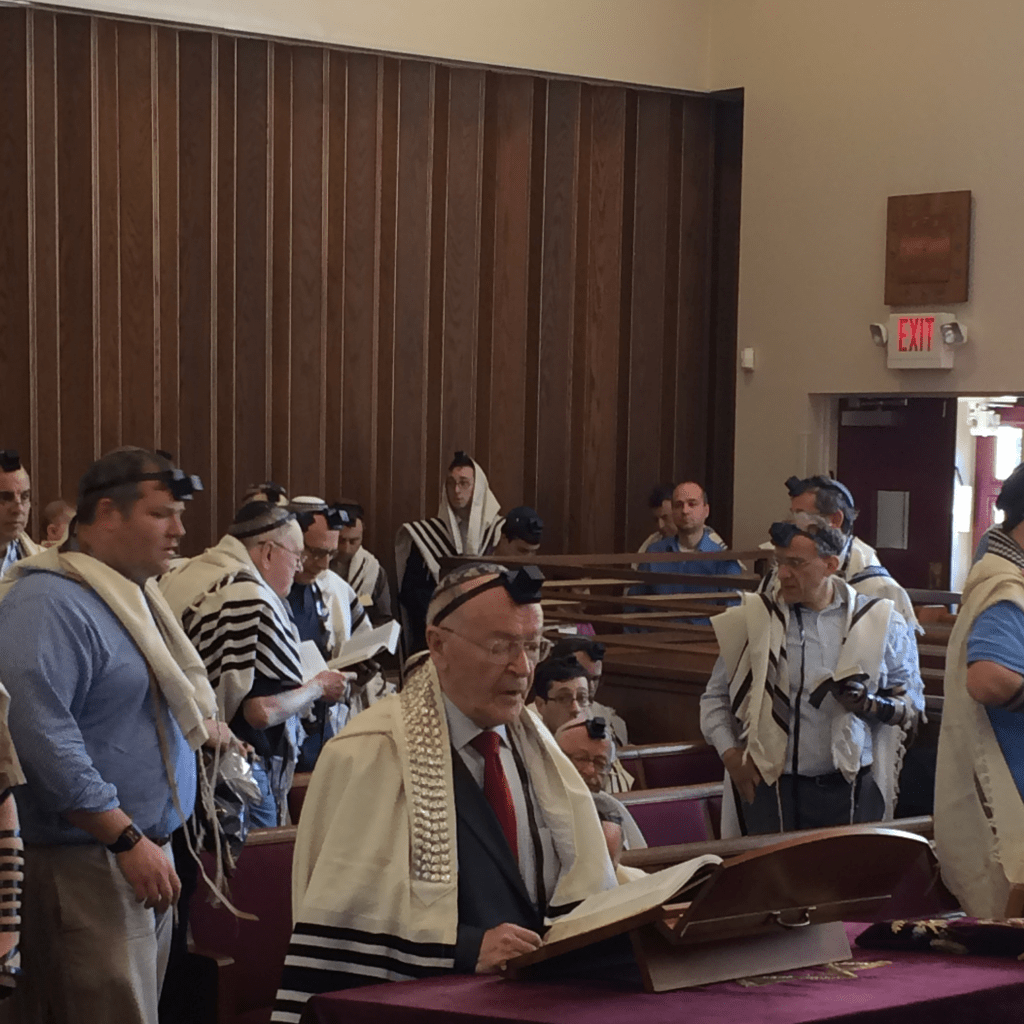
Over a decade ago our synagogue had Rabbi Sharon Shalom join us for Shabbat as Scholar in Residence. Rabbi Shalom is an Israeli rabbi, lecturer and author. He is a rav of one of the Tzohar “open communities” in Kiryat Gat. He was born in 1973 in Ethiopia and grew up in a small Jewish village located in the North of Ethiopia.

That Shabbat he shared with us the harrowing story of how he got to Israel. When he was little he listened to his grandfather telling him that God would one day rejoin Jews around the world. This biblical promise led him and a friend to leave the village to move to Jerusalem at age seven. They got lost and returned home. But, soon after when the Ethiopian Civil War erupted he found another opportunity to move to Jerusalem. His mother sent him to join a group of Jewish refugees leaving for Israel. How could a boy of that age manage apart from his family? How was he able to walk for days and survive in wild of Ethiopia? One year after arriving in Israel Shalom was misinformed that his family had died in Ethiopia. However two years later they were reunited when his parents arrived in Israel. We were all spell bound by his story. He and his story left a huge impression on us all.
After the rabbi spoke and before Mussaf Chaim Ezra Berkowitz z”l, our Candy Man, went up to speak with Rabbi Shalom for a moment and give him a hug. At Kiddush I made a B-line to ask Chaim Ezra what he said to the visiting rabbi. What could this elderly Holocaust survivor from Europe have to say to this young Ethiopian Rabbi? They grew up worlds apart in terms of geography, age, and race. Chaim Ezra smiled and me and said, ” Landsman“. While they did not share a connection to the same homeland, they did share a unique bond. Like Rabbi Shalom, Chaim Ezra survived the war as a child in the forest assuming his family was all died ( most of them had been killed). After this physically and mentally challenging youth they both survived and even thrived, but always carried with them that they were strangers in a strange land.
This expression of being landsmen reminded me of this classic scene from the Frisco Kid:
Chaim Ezra was a pillar of our community and at the age of 97 passed away last week. He lived a full life, I can only imagine the pain he carried. In the last few years he stopped sharing his Holocaust stories, because in the telling these stories he would relive the pain and that was too much.
One of my favorite Brené Brown quotes is “Courage starts with showing up and letting ourselves be seen.” Even if they are a complete stranger, when you meet a landsman you find comfort that they share a history and nostalgia for a place where neither of you live any longer. There are things that the people around you who are closest to you just do not perceive , but finding a landsmen allows you to be seen.
This week has been hard for me with the passing of Chaim Ezra. This exists on personal, communal, and even historical levels. I will miss him as an older friend. The community will miss him as a fixture and north star. And with his passing we close the link to Europe and get closer to ending our direct connection to the horrors of the Shoah. Through Chaim Ezra we maintained a connection to a world that is long gone.
I was also thinking about this topic this week as we read Shmot, this week’s Torah portion. There we read:
Yosef died, and all his brothers, and all that generation. But the Israelites were fertile and prolific; they multiplied and increased very greatly, so that the land was filled with them. A new king arose over Egypt who did not know Yosef. ( Exodus 1: 6-8)
Clearly this is all the set up to this new king enslaving the Jewish people, but why did it bother telling us that this kind did not know Yosef?
At one level this speaks to a lack of appreciation for what Yosef did to help Egypt. The implications are that if the king knew who Yosef was he would never have enslaved his descendants. On another level this speaks to the shame felt by Yosef’s brothers. They sold him down into slavery and when their fortune drove them to seek food in Egypt they too did not “know” that they person in front of them was Yosef. And when Yosef lets himself be known to his brothers all he wants it show up and been seen by them. And yet an even deeper level this speaks to the fear and fragility of memory when a generation dies. Who will remember them when they are gone? We hardly remember that older generation, why should the larger society remember us?
No matter who we are, the experiences we have had, or what we have see, we all just want to show up and be seen. We are all looking for our landsmen.
May Chaim Ezra’s memory be for a blessing.
*related posts:
 Said to Myself
Leave a comment