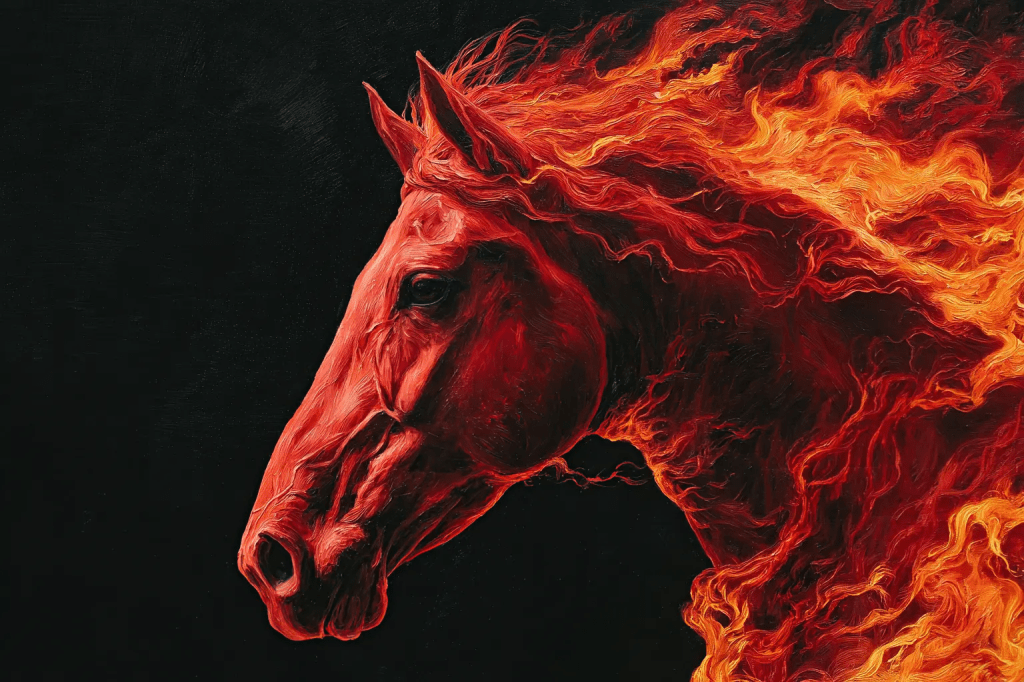
Yesterday, February 17, 2026, was the advent of Ramadan and also the Chinese Lunar New Year. In Chinese tradition, the Year of the Wood Snake ended and we started off the year of the Fire Horse with its nostrils flared and tail aflame. This is the seventh animal in the Chinese zodiac, the Horse, symbolizes action, freedom, fearlessness, and breakthrough. Fire horse energy is bold, independent, charismatic, passionate, impulsive, and impatient. According to Chinese tradition this year promises rapid change and bold action. I am not sure how much more of this we can handle.
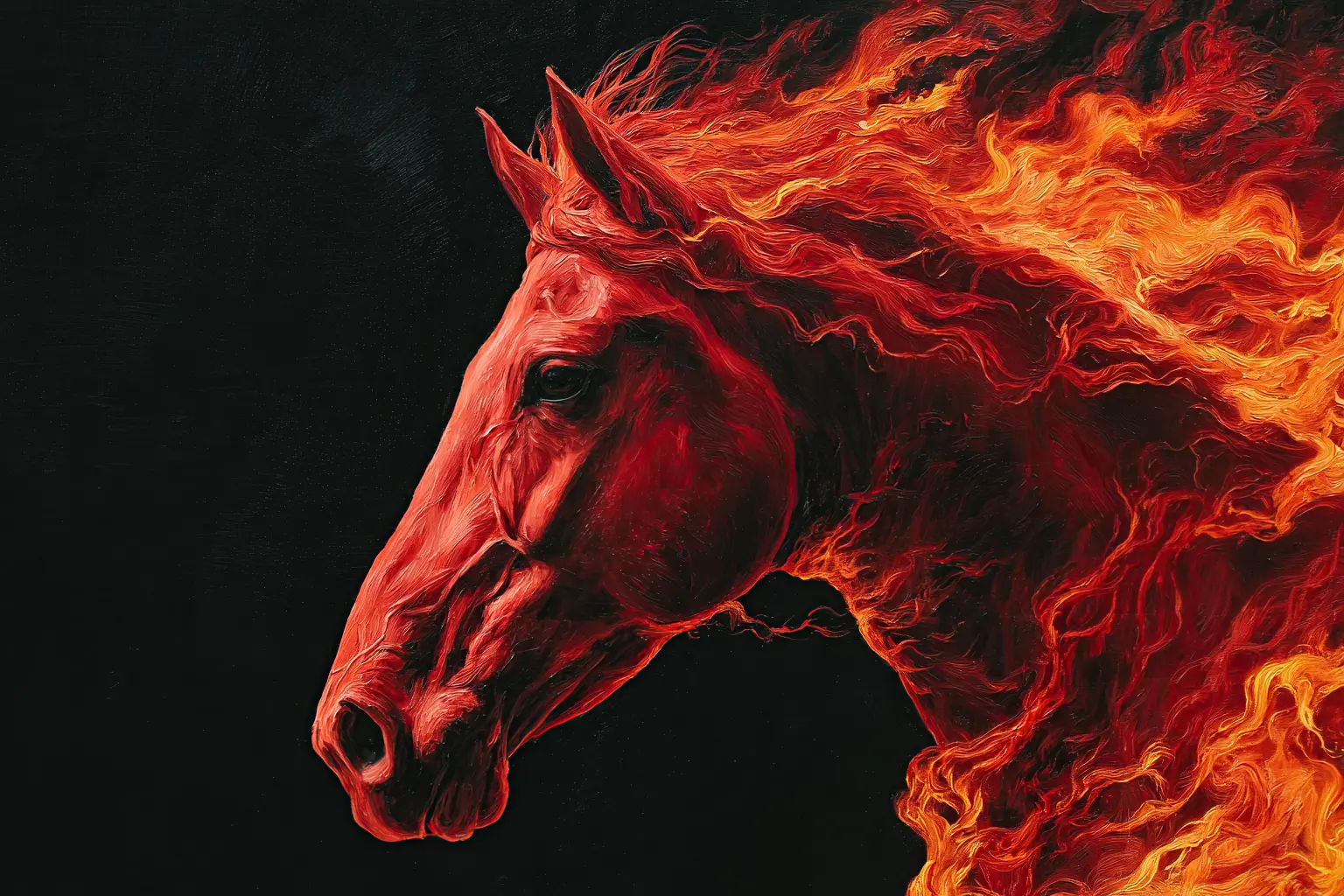
That said it did get me curious to explore the image of the Fire Horse in Jewish tradition. The Torah’s attitude to horses reveals a range of perspectives, based on the different experiences of the ancient Jewish people. Unlike the pig and the dog, which are not only forbidden as food but are widely scorned throughout the Torah, the horse, also forbidden as a food, often symbolizes great strength and courage, as well as spectacular beauty.
The most famous image of the horse in the bible comes from the Pharoah’s Chariots during the crossing of the Sea of Reeds during the Exodus from Egypt. As we know from our Passover story the God of Israel led the people with a “mighty arm.” Compared to divine power the horses and chariots seem unreliable. Pharoah is a hot head and he is just chomping on the bit to get his slaves back and that is his undoing. The idea that the magnificent edifice of Egyptian military power, based on their horsemen and chariots, crumbled as the waters of sea engulfed them, resulted in derision towards everything that the Egyptians prized. So, in the Psalms, the horse is a vain hope for deliverance; despite all its great strength it cannot save (Psalms 33:17). The prophet Isaiah, too, expresses scorn for horses: Woe to those who go down to Egypt for help, and rely on horses . . . (Isaiah 31:1). In this way the horse is human’s false sense of their own power and agency compared to the Biblical God.
But what of the inordinate passion of the Fire Horse?
In the Bible, adulterers are often thought of as similar to horses in their excessive libido, an idea found in Jeremiah and expressed very forcefully to bring out the unbridled nature of fornicators: They were as fed horses roaming at large; everyone neighed after his neighbor’s wife (Jeremiah 5:8). A similar image of the horse as a lecherous creature is forcefully employed by Ezekiel as an indictment of Israel for associating with its unholy neighbors, especially the Egyptians. The prophet’s own vituperative language itself borders on bawdy: She doted on their paramours, whose flesh is as the flesh of donkeys, and whose issue is like the issue of horses (Ezekiel 23:20).
In either case the horse represent man’s false sense of his own power or him succumbing to his most basic urges. I hope that we all have a wonderful year in which we are all in control of ourselves and listen to our better angels. We should all be blessed with a year that is – well, more bridled.
 Said to Myself
Leave a comment