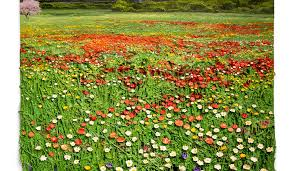
Ishay Ribo came out with another great album. This is his 5th. Clearly many of the songs on it are his reaction to this past year. The single that has gotten the most play has been Bloom for Their Return יפרחו לשובם .
This is a powerful song in which he explores what we might do with all of the pain and suffering in the wake of October 7th. Is there a hope for a brighter future? Here he sings that, “All of the tears, the pain, that ripped from my heart will grow a world.” He images us cultivated orchards and vineyards on the grounds of our anguish.
Alluding to Song of Songs he says, “Foxes destroyed a vineyard”. There in Song of Songs we read:
Catch us the foxes,
The little foxes
That ruin the vineyards—
For our vineyard is in blossom. ( Song of Songs 2:15)
It is clear that Hamas has broken in and destroyed our home, but what do we make of it now?
The foxes also appear in powerful story with Rabbi Akiva and the Rabbis at the end of Makkot. There we read:
On another occasion they were ascending to Jerusalem after the destruction of the Temple. When they arrived at Mount Scopus and saw the site of the Temple, they rent their garments in mourning, in keeping with halakhic practice. When they arrived at the Temple Mount, they saw a fox that emerged from the site of the Holy of Holies. They began weeping, and Rabbi Akiva was laughing. They said to him: For what reason are you laughing? Rabbi Akiva said to them: For what reason are you weeping? They said to him: This is the place concerning which it is written: “And the non-priest who approaches shall die” (Numbers 1:51), and now foxes walk in it; and shall we not weep? (Makkot 24b)
And why did Rabbi Akiva laugh? He laughed because the presence of the fox meant that the prophecy was being fulfilled. And just as this prophecy of destruction was playing out, so too would the prophecy of the rebuilding. The facts are the facts, but how we make sense of them is a choice. We can choose to have tears or laughter. As Reb Nachman taught: “If you believe breaking is possible, believe fixing is possible.”
It has been year and this conflict is still not over. It seems that we are still far off from laughter. What importance of tears? In his Man’s Search for Meaning, Viktor E. Frankl wrote, “But there was no need to be ashamed of tears, for tears bore witness that a man had the greatest of courage, the courage to suffer.” Ribo’s song speaks of the courage to choose to make something productive from all of the tears, the pain, that ripped from our hearts. We need to courage to grow a world filled with orchards, vineyards, forests, and fields filled with anemone and almond. From this imagination “Will bloom for their return”. Bring Them Home Now.
As I have in the past, I started to put together a contemporary page of Talmud to play with the lyrics to this song. I would welcome any reflections or edits you might offer on this draft.

 Said to Myself
Leave a reply to Our Day of Joy: 1st Yahrzeit of October 7th – Said to Myself Cancel reply