For the last 100,000 years, we have accumulated enormous power. But despite all our progress we now find ourselves in an existential crisis. The world is on the verge of ecological collapse. Misinformation abounds. And we are rushing headlong into the age of AI—a new information network that threatens to annihilate us. For all that we have accomplished, why are we so self-destructive?
i just finished reading Yuval Noah Harari‘s new book Nexus: A Brief History of Information Networks from the Stone Age to AI. In this book Harari looks through the long lens of human history to consider how the flow of information has shaped us, and our world. What is the interplay of society and information networks? Are they used for the pursuit of truth and wisdom or order and power? Taking us from the Stone Age, through the canonization of the Bible, early modern witch-hunts, Stalinism, Nazism, and the resurgence of populism today, Harari explores how different societies and political systems throughout history have wielded information to achieve their goals, for good and ill. And he addresses the urgent choices we face as non-human intelligence threatens our very existence.
One anecdote that Harari shared has stuck with me. In 2016 Lee Saedol , one of the world’s top Go players, shockingly lost to an A.I. Mr. Lee was beaten by AlphaGo, an A.I. computer program developed by Google’s DeepMind unit. The stunning upset made headlines around the world and looked like a clear sign that artificial intelligence was entering a new, profoundly unsettling era.

By besting Mr. Lee AlphaGo had solved one of computer science’s greatest challenges: teaching itself the abstract strategy needed to win at Go, widely considered the world’s most complex board game. But the implications of his loss went far beyond the game itself. AlphaGo’s victory demonstrated the unbridled potential of A.I. to achieve superhuman mastery of skills once considered too complicated for machines. “Losing to A.I., in a sense, meant my entire world was collapsing,” Lee said in a recent interview with The New York Times. What does this mean for the rest of us? Is this the beginning of the end?
Before getting to these big questions regarding AI I wanted to explore a little more about the nature of this game that originated in China more than 2,500 years ago.

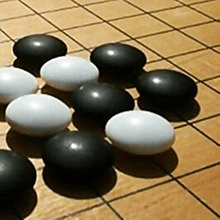
Go is an abstract strategy board game for two players in which the aim is to fence off more territory than the opponent. It is believed to be the oldest board game continuously played to the present day. A 2016 survey by the International Go Federation‘s 75 member nations found that there are over 46 million people worldwide who know how to play Go, and over 20 million current players, the majority of whom live in East Asia.
Regarding the game play, the playing pieces are called stones. One player uses the white stones and the other black. The players take turns placing their stones on the vacant intersections (points) on the board. Once placed, stones may not be moved, but captured stones are immediately removed from the board. A single stone (or connected group of stones) is captured when surrounded by the opponent’s stones on all orthogonally adjacent points. The game proceeds until neither player wishes to make another move. When a game concludes, the winner is determined by counting each player’s surrounded territory along with captured stones and komi (points added to the score of the player with the white stones as compensation for playing second).
This was a watershed moment in the growth of AI, but So what is the significance of the game being Go? Go posed a tantalizing challenge for A.I. researchers. The game is exponentially more complicated than chess, with it often being said that there are more possible positions on a Go board (10 with more than 100 zeros after it, by many mathematical estimates) than there are atoms in the universe.
Using so-called neural networks, mathematical systems that can learn skills by analyzing enormous amounts of data, AlphaGo started by feeding the network 30 million moves from high-level players. Then the program played game after game against itself until it learned which moves were successful and developed new strategies. It showed what computers that learn on their own from data. AlphaGo is at the nexus of our society and AI. Mr. Lee had a hard time accepting the defeat. What he regarded as an art form, an extension of a player’s own personality and style, was now cast aside for an algorithm’s ruthless efficiency.
I have been thinking about the game play of Go and our shifting relationship with AI today specifically as it is Asara B’Tevet, the 10th of Tevet. It is the fast day that marks the beginning of the siege of Jerusalem by Nebuchadnezzar II of Babylonia—an event that began on that date and ultimately culminated in the destruction of the First Temple and the conquest of the Kingdom of Yehudah. In many ways this is the beginning of the long slog to our diaspora that only ended in 1948. In many ways AlphaGo is the beginning of our being besieged by this growing AI revolution. Let’s hope it does not have as disastrous a conclusion.

 Said to Myself
Leave a reply to nancy messinger Cancel reply