
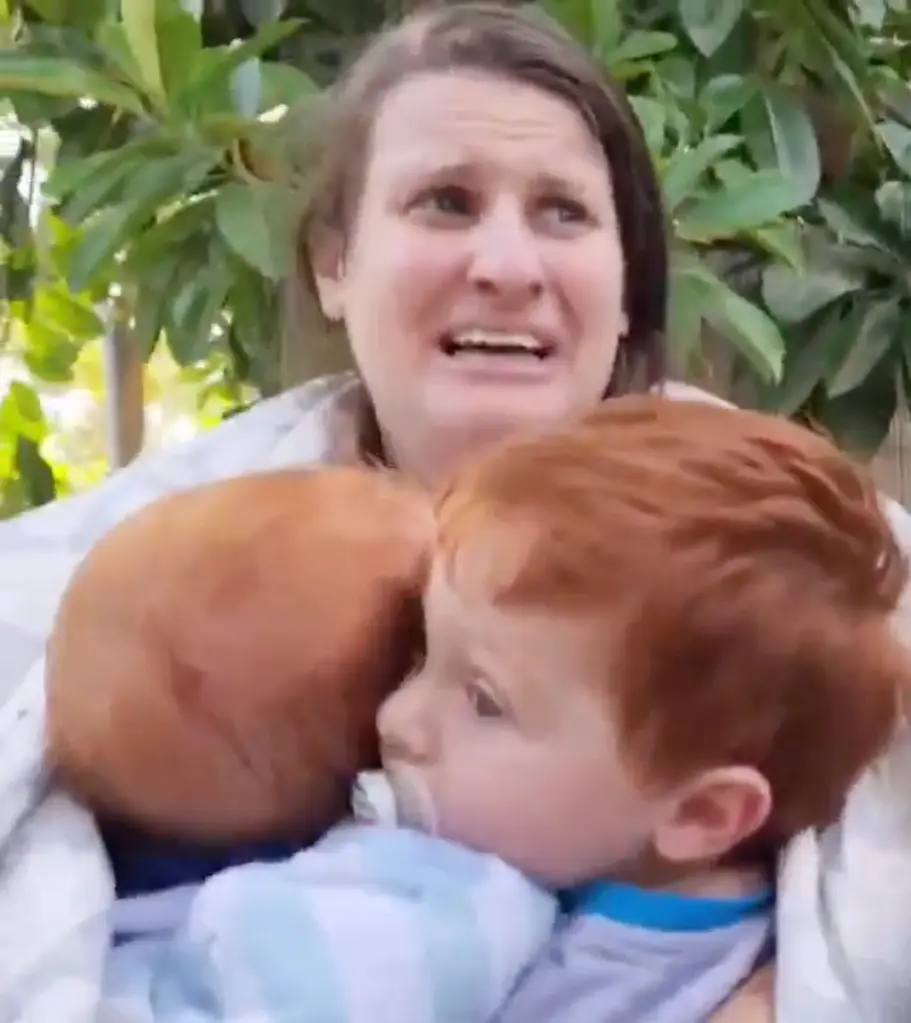
Passover this year marks just over a year and half since the terrorist attacks of October 7th. Pausing to reflect, we see that this has been a difficult time for all of us. It has been full of so many extreme emotions. We have sadness, dismay, and horror with the state of the world. And at the same time it has been full of love, connection, and empathy within large parts of our community. On the occasion of this holiday I am left wondering, why did the return of Ariel and Kfir Bibas z“l cut so deep to the Jewish psyche? As a human being, there is something to the loss of innocence of these children that is so clearly wrong. As a Jewish person, their deaths strike at the core of this unending history of violence against Jews. As a parent I am left thinking how we explain their murder to my own children. As someone who works with Jewish camp professionals some of the weight of their murder is connected to these professionals’ being in loco parentis. We take the health and well being of Jewish youth very seriously. That said, I do not think that this is the full answer to this question.
But before we get to that and before we settle into Seder this year I wanted to explore a simple question. What is with the leaning- הֲסִבׇּה HaSeba that we are instructed to do at the Seder all about?
We learn in the Mishna in Pesachim:
Even the poorest of Jews should not eat the meal on Passover night until they recline-יָּסֵב YaSev. (Mishnah Pesachim 10:1)
In our yearly reenactment of our journey from slavery to freedom, we need to imagine ourselves living as slaves and our subsequent move to freedom. Even the poorest Jew reclines to their left when they eat. This seems to be the behavior of free people,royalty, or the elite. In taking the time to lean we are not just eating, but we are signally that we are open to meaningful conversations about things that matter. But, is there still more to this leaning?
When Samuel finds out that Saul will be stripped of his monarchy he also is informed that a son of Jesse will take Saul’s place. Samuel goes to Jesse to see a parade of seven sons, but none of them were meant to be the next king. There we read:
Then Samuel asked Jesse, “Are these all the boys you have?” He replied, “There is still the youngest; he is tending the flock.” And Samuel said to Jesse, “Send someone to bring him, for we will not sit down to eat until he gets here.” So they sent and brought him. He was a redhead, bright-eyed, and handsome. And the Lord said, “Rise and anoint him, for this is the one.” ( Samuel I 16:11-12)
Samuel is excited, clearly this is the one. Despite his being overlooked and the youngest, David is meant to be the next king of Israel. In this context it makes sense that Samuel sent for David right away. But why does the text bother to tell us that they would need to delay the meal? We did not even know they might be having a meal. On this seemingly extraneous phrase “we will not sit” Rashi comments:
This means we will not sit to eat; every instance of sitting for a meal is called הֲסִבׇּה -leaning. (Rashi on I Samuel 16:11)
Rashi is hinting at something very profound. Even before we meet this young David, we are with Samuel in his excitement and anticipation. Despite being shown 7 brothers that were not meant to be the king, this one has to be him. David will be anointed to be the king and redeemer. Before we kick back and lean out to have a sumpuouse meal, Samuel is leaning in to the possibility that David will be the next leader of Israel.
And in so many ways we have been there with Samuel throughout most of our history waiting for the redeemer to come and liberate us. Be it from that first Seder in Egypt or any of the myriad disasters of our history, we are always waiting for our redeemer to come and save us. This yearning, longing, and sitting with uncertainty has been a constant in our people’s narrative. This counterfactual hope and expectation for something better is the key to how we survive and how we thrive.
As the story goes Reb Azriel David Fastag, a Modziter Hasid, composed a melody of “Ani Maamin” on a cattle car heading to the Treblinka death camp, and it was sung by many Jews on their way to gas chambers at various camps. They sang:
I believe with a complete belief
In the coming of the Messiah
And even though he may tarry
I will wait for him, whenever he comes
In many ways our capacity to hold on to hope despite or even because of the challenges that befall us is the secret sauce of Jewish resilience.
So here we are at the Seder reenacting our transition from slavery to freedom. We are not leaning out in our luxury, but rather leaning in with anticipation. Like Samuel waiting for David we are yearning, longing, and hoping for our redeemer to come.
So, you ask, why am I asking you to take this moment to reflect on the pain of losing the Bibas boys? Miriam Yellin-Steklis wrote a poignant poem in the wake of these events depicting one of Bibas brothers going up to heaven where he meets King David. She writes:
Said King David,
“Come to me, my little one,
My sweet one,
And look: I’m gingy- redheaded too!”
He gazed into my eyes
He gazed into me,
And whispered, “my chickadee, my chick,
My little gingy-redhead.”

For 15 months we all held out hope that these innocent redheads would come back alive. Even until the very last moment we wanted to believe that they would survive. We waited and waited and tried to hold on to this hope. In so many ways the return of the mutilated bodies of Ariel and Kfir represented the antithesis of our waiting for David, the other gingy. Their burial represented a painful certainty. It has forced us to reconcile the limits of our national savior. On the deepest level this is why it was so devastating.
So where do we go from here? Two weeks ago I was in Israel for one of three training sessions that the Jewish Agency ran for the 2000 summer emissaries coming to work at Jewish camps this summer. If we think that we are carrying a lot, it is hard to imagine how much these young people are holding, having just finished their army service. To see them dancing, smiling, and excited to share their love of Israel was uplifting. They are models of hope.
Like that generation in Egypt, like Samuel, like Reb Fastag, and like so many of our ancestors before us, we need to dig in deep for a counterfactual belief in a better future. This Passover, we cannot just lean out in luxury, we need to lean in with anticipation. Our hope is not yet lost. We are the beneficiaries of a hope of two thousand years. With the advent of spring we look forward to the summer when many of our children will connect to Israel and Israelis at Jewish summer camp. There they will rekindle their hope for a brighter future. Here is to leaning into hope for all of us. Have a meaning Seder and a hopeful Passover Holiday.
*Original Source sheet: Waiting for David: In Memory of Ariel and Kfir z”l

 Said to Myself
Leave a reply to The Lord is My Shepherd: Simple and Unconditional Love – Said to Myself Cancel reply