Rosh HaShana prayers hit different this year. It was our community’s first time doing these services without Chaim Ezra Berkowitz z”l. Sadly this 97 year old Holocaust survivor passed away this year. There are a few moments in the service that were have long been his moments to lead the community. This year the rest of us had to sing a little louder in his absence. In many ways he was the anchor of our community.
As much as the adults missed his presence in synagogue, it saddened me more realizing that the younger children would not even know to miss our beloved Candyman. There are plenty of other people who have filled that void of giving them candy, but no one else could match the joy Chaim Ezra got from this small act of giving a sweet to a child. As we say in Psalms:
They who sow in tears
shall reap with songs of joy. ( Psalms 126:5)
Chaim Ezra lost his family, friends, and the world of his youth in the Holocaust. I cannot even imagine the volume of tears he shed in his life. Nothing would never be commensurate with his sea of tears, but this simple and pure joy of giving candy to our children was never futile.
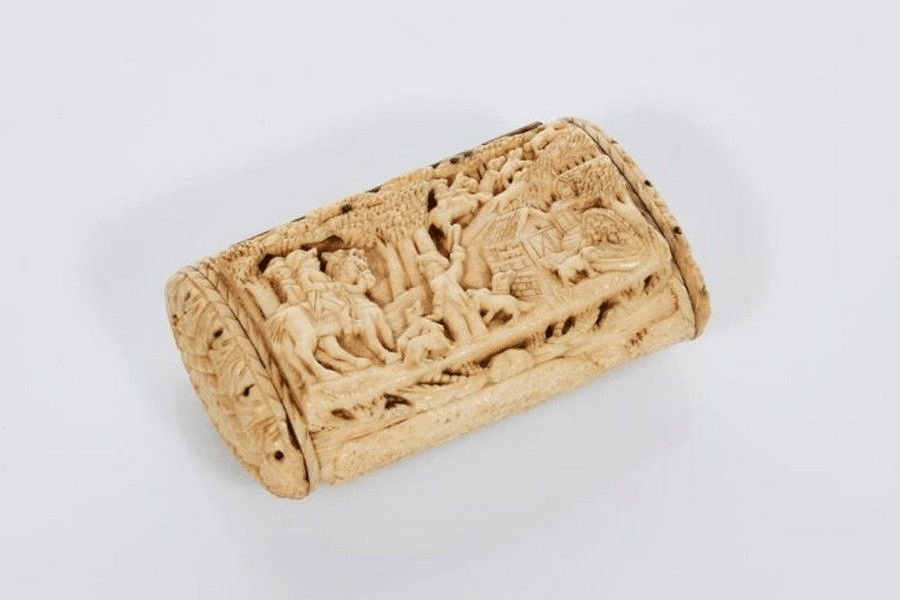
Years ago when our community was in the hold sanctuary Chaim Ezra went around on Yom Tov with a beautiful ivory snuff box asking if I wanted any snuff. In his mind it was like candy for adults to make Yom Tov special. While I never took him up on the scented powdered tobacco, I deeply appreciated this old school offering. Besides missing Chaim Ezra as a person, I feel that his absence has broken our link to a world that was long gone.
I was thinking about Chaim Ezra’s snuffbox when reading a book by Rabbi David Ebner z”l recently published on the occasion of his first Jahrzeit. Rabbi Ebner was the Mussar Rebbe when I was in Yeshiva. The Dance of Teshuva is an amazing collection of his essays and poems by on teshuva, repentance or “return”. His talks on teshuva were only eclipsed by his romantic faith in our ability to improve. He had a huge impact on my development as a Jew and human being.
In his book there is an amazing story about the Rabbi Menachem Mendel of Kotzk. The Kotzker spent the last 20 years of his life in a solitary. As the story goes, in a rare moment addressing his withdrawal from the world, an agitated Rebbe asks his frightened followers to tell him who he is. When they respond that he is their Rebbe, he rejects their answer and declares himself to be “the holy goat.” Then he want on to tell the story of the holy goat:
Once upon a time, a Jew was walking through a field when he came upon a goat. Of course, there would be nothing noteworthy in that but this goat was extremely peculiar. Its horns stretched up and up, high up into the sky. Though something was very odd about this, the Jew sensed that the goat was a gentle creature and he reached out to feel the texture of its horns. They felt and looked like the best ivory, something he had only heard about from somebody who had once travelled to the farthest lands.
“Tell me,” he said to the goat, “what these horns of yours are for. You must realize that I’ve never seen such horns before in my life.”
“You are right,” said the goat. “I am the only goat with such horns and they were given to me because I have a special mission to perform. You see, each night when darkness falls and the stars come out, it is my task to raise my head and to brush the stars with my horns. When I do this the stars begin to sing.”
The Jew thought about this answer for a minute and then said to the goat, “I wonder if you might do me a small favor. You see, I’ve never seen such wondrous horns. Would you allow me to cut off a small piece that I might carve of it a snuffbox. You can’t imagine how happy this would make me.”
Unhesitatingly, the goat lowered its horns and welcomed the Jew to full his request. The Jew hurried home and spent the day fashioning a snuff box. Naturally, he brought it to the synagogue the next morning and after prayers offered his fellow congregants a pinch of snuff from his new snuff box. Of course, they were all astounded at its beauty and complimented it as the most magnificent snuff box that had ever existed.
And, of course, they all wanted to know where he had obtained it. Hardly had he finished telling them the story when they all rushed from the synagogue in search of this goat, this holy goat. The news spread like wildfire and Jews from all over were to be seen rushing pell-mell in search of the holy goat, each one carrying a pocket knife to get snuff box material.
Many a Jew found the goat in its wanderings; many a time it lowered its horns; and many a beautiful snuff box was fashioned. the goat still wanders the world. When evening falls and the stars come out, the goat still raises its head so that its horns may brush them and make them sing. But its horns have become snuff boxes. They no longer reach up into the star-filled heaven. And the stars no longer sing.
“Who am I,” repeated the Rebbe. “I am the goat, the holy goat.”
The Kotzker rushed back into his room, closed the door, and was once again silent.
In their lives Rabbi Ebner and Chaim Ezra both represented a link to another time and another place in my life and in our collective story as a people. As we prepare for Yizkor this year, I mourn their having gone into hiding. In their absence I feel unmoored. We all need that amazing mussar schmooze, piece of candy, or pinch of snuff. My hope that is in sharing the stories of these holy goats we brush the stars in sky to make them sing again.
Gmar Chatima Tova
*Related pieces on Chaim Ezra Berkowitz z”l:
- Showing Up and Being Seen: Reflection on Chaim Ezra z’l
- The Candy Man z”l -2026
- The Sweetness of Jewish Life– 2011
- Sweet Sweet Candy: A Thought for Yom HaShoah– 2019
*Related pieces on Rabbi David Ebner z”l:


Leave a comment