Last year I found myself listening to a lot of Alex Warren. He is an American singer songwriter. He began independently releasing music in 2021 before signing with Atlantic Records the following year. His 2025 single “Ordinary” topped the Billboard Hot 100 and numerous other charts for several weeks. He was nominated for the Grammy Award for Best New Artist in 2026. And it is a real earworm and totally worth a listen:
Here Warren explores the idea that true love can transform a mundane humdrum life into something extraordinary. When we find our soulmate and you feel completely devoted to them everything can be sacred.
Warren notably uses strong religious and Catholic imagery throughout the song to describe the intensity of his relationship, essentially comparing his experience of love to heaven and his partner to God. The chorus highlights this transformation from the mundane:
“You’re takin’ me out of the ordinary
I want you layin’ me down ’til we’re dead and buried
On the edge of your knife, stayin’ drunk on your vine
The angels up in the clouds are jealous knowin’ we found…”
Despite the decline of religion all around us, if you are open to it we can return to having faith in God and people. Warren explained in an interview that he wanted to write a love song that went beyond standard pop tropes, drawing inspiration from his relationship with God to convey the depth of his feelings for his wife.
Being that are in Elul on our march toward Rosh Hashana, a different line in the song has been sticking with me:
At your altar, I will pray
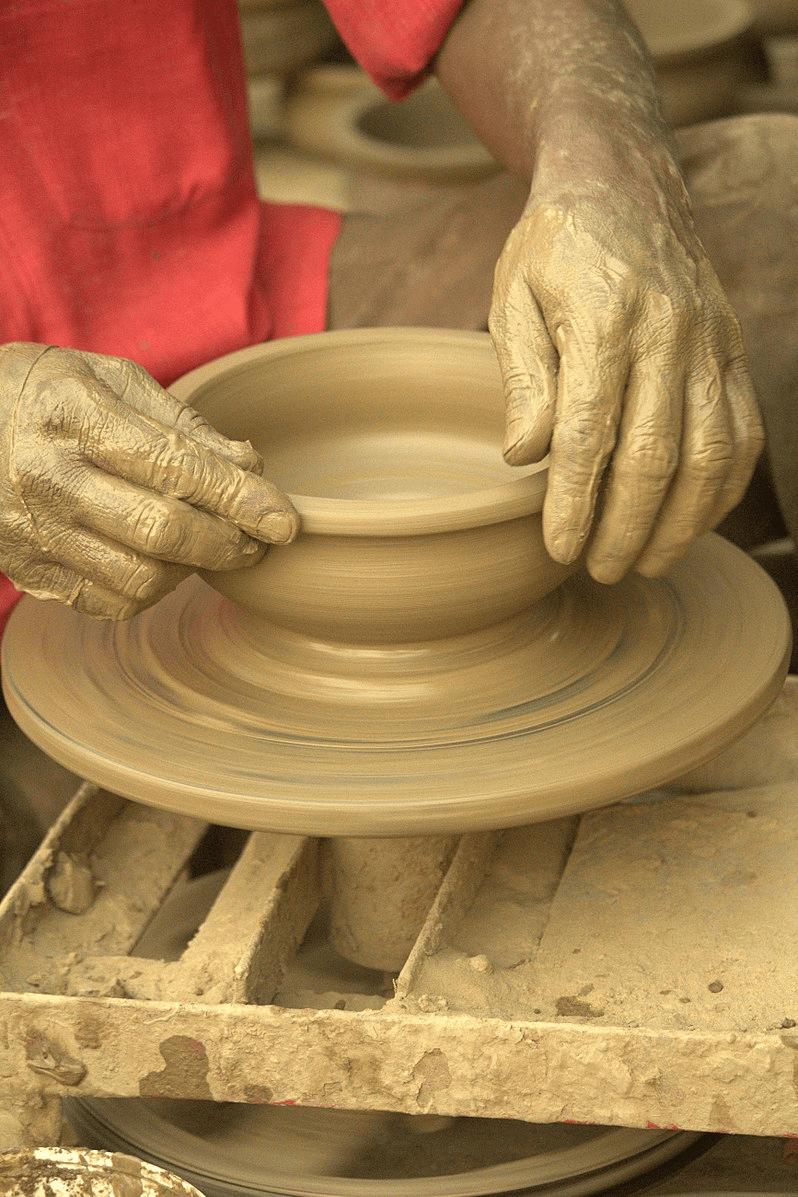
You’re the sculptor, I’m the clay
This resonates with one of my favorite lines in the High Holiday liturgy. In the כי הנה כחומר ביד היוצר “For behold, like clay in the hand of the potter.” which is recited on Rosh Hashanah and Yom Kippur we pray” As the clay in the hand of the potter… so are we in Your hand.”
This image itself echoes the haftarah we read on the first day of Rosh HaShanah about Hannah. Grieving her childlessness while her husband’s other wife has children, Hannah prays silently and intensely at the Shiloh shrine. High Priest Eli initially mistakes her devotion for drunkenness, but upon learning of her deep sorrow, he blesses her. God answers Hannah with the birth of a son, Samuel; in gratitude, she fulfills her promise by dedicating him to God’s service for life and singing a hymn praising divine strength, justice, and sovereignty. In her praise for God after the birth of Samuel she says, “Neither is there any rock [tzur] like our God” (I Samuel 2:1)
The Talmud in Tractate Megillah extends this image and says that God is, in fact, the greatest artist ever known, as evidenced by all of God’s creations. There we learn:
Hannah further said: “Neither is there any rock [tzur] like our God” (I Samuel 2:1). This can be understood as saying that there is no artist [tzayyar] like our God. How is He better than all other artists? Man fashions a form upon a wall, but is unable to endow it with breath and a soul, or fill it with innards and intestines, whereas the Holy One, Blessed be God, fashions a form of a fetus inside the form of its mother, rather than on a flat surface, and endows it with breath and a soul and fills it with innards and intestines. ( Megilah 14a)
Beholding the creation of any human being we marvel at God as an artist. On Rosh HaShanah, God’s coronation day we celebrate the miracle of life even if it might feel mundane. At God’s altar we will pray, God is the sculptor, and we are the clay.


Leave a comment