*Article from Cultivating Jewish Peoplehood at Camp, Peoplehood Papers #36: Retrieved August 12, 2026.
Being away from home, parents, and set routines for the first time can be a revealing experience for anyone. Existing beyond the constraints of the lives we know allows us to experiment with who we are and who we want to become. This holds true for a camper today, Moshe in Exodus, and the entire Jewish People. Unfettered by formal and rigid curricula, testing, and grades, the central project of camp is to support its members to discover, reveal, self-actualize, and become their full selves. Similarly, after leaving Egypt, the only home Moshe ever knew, Moshe finds refuge as a shepherd in Midian. There he has to figure out who he is and who he wants to become.
Moshe’s life is changed when he encounters God at the burning bush. There he discovers his purpose and is charged with freeing his people from bondage. Then Moshe is supposed to return to the same location with the newly redeemed Israelites for the revelation of the Torah at Har Sinai. About this event we read:
Now Har Sinai was all in smoke, for God had come down upon it in fire; the smoke rose like the smoke of a kiln, and the whole mountain trembled violently. (Exodus 19:18)
It is striking that just as the little bush was burning, so too is God’s mountain. What are the connections between the Bush (Sneh) and the Mountain (Sinai)? They share similar names, the same location, and both are miraculously on fire. And of course they are the site of revelations, one personal and one national. Rabbi David Solomon Eibeschutz, the 18th century kabbalist, notes:
It is known that the image of the bush (Sneh) is visible in all the stones of that mountain (Sinai). A wondrous thing was testified regarding it: a stone from Mount Sinai contains the form of the Sneh. If the stone is broken in two, each piece contains the form of a bush smaller than the first. If it is broken into ten thousand pieces, each part contains a very small form of the bush according to the size of the stone fragment—yet a complete bush is found within it. (Arvei Nachal Exodus 1:28)
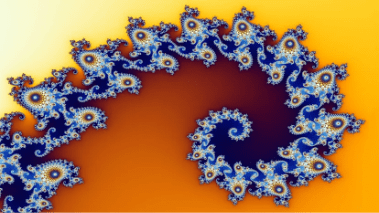
In this place the part, the whole, and every unit in between are bound together as one. An ancient fractal, this depicts a never-ending, infinitely complex geometric pattern that exhibits self-similarity. In this place the part, the whole, and every unit in between are bound together as one. An ancient fractal, this depicts a never-ending, infinitely complex geometric pattern that exhibits self-similarity.
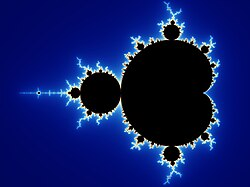
Essential to our people’s notion of revelation is that smaller parts look similar to the whole and repeat at scale.
All of this presents a deep insight into the nature of being part of the Jewish people and power of Jewish summer camp. Just like finding Moshe’s calling at the Sneh, campers are able to individuate at camp. By sharing a living space, these campers navigate their role in the bunk. Are they going to be the top bunk or bottom bunk? How will they share the hot water during shower hour? Will Bunk 12 be everything that the group wants it to be? What will they put on our bunk plaque to memorialize this summer forever? Their companions are the people they share Challah with on Shabbat. Often for the first time campers get to share space and collective identity with their bunk mates.
The work of negotiating identity is not limited to the bunk. This expands out to their age group/ division/ edah / shichvah / kevutzah. Who will get what parts in their play? How will they fare in their basketball game with the older age group? What will they put on their swag to memorialize the summer? After all of their years at camp, what will be their capstone project and gift for camp?
This then expands to the larger camp community. When going out of camp excursion, what behavior is expected of them when “in public”? How will other people see each of them as representatives of their camp, their camp’s movement, and the Jewish people?
Just as Har Sinai is a fractal of revelation, Jewish camp is a fractal of self-actualizing. From the youngest camper to CITs, from junior counselors to the camp director, and including alumni of any age, camp is built on a continuum of role models. All along the way people become aware that they are part of a larger whole. Over time, they develop a deeper sense of collective consciousness which is significant to their personal identity and the cohesion of the group. In the beginning, campers feel like everyone at camp is there to support their success. This grows into their desire to be part of this vibrant community. Then in service to this community, they learn and push themselves to undertake increasing responsibility in leading this cherished community. And in the end, this evolves into aspiring to be learners and leaders from the camp community for the larger world.
At the center of this role model continuum is the 18-year-old near dear peer (see paper for footnote). What they may lack in literacy, knowledge, skill, or confidence they make up for in being cool and relevant, making them extraordinary. These young adults are far from figured out, but in their own efforts to find themselves they are the perfect role model of self-actualization for their campers. Building on previous research, (Povilaitis et al., 2018), Foundation for Jewish Camp with the generous support of the John Templeton Foundation, has done a study of character development at Jewish camps. The Character at Camp Initiative emphasizes “the broad and demanding role of camp counselors; they must be a role model for youth, help youth to feel valued and understood, and work actively to cultivate relationships among youth.” (see paper for footnote)
The counselor’s job is not to be the sage on the stage but rather the guide on the side. Their job is to transcend themselves and ignite the passion and intrinsic motivation in each of their campers. Campers express their gratitude to their counselors by imitating their actions and paying it forward to another bunk of campers. In doing so, the pattern is replicated, continuing our people’s chain of responsibility for one another. Similarly, the camp hires another generation of division heads to expand this role model continuum all the way to the camp’s senior leadership. It is not just that the young staff members see themselves as part of the whole, but also the Jewish people see these emergent leaders as representing who we will be as a people. In each of us striving to reach our potential in the context of community we start to realize our potential as a people.
Often people ask if camp is real life or just an imagined community? As Abraham Maslow writes, “Self-actualized people… live more in the real world of nature than in the man-made mass of concepts, abstractions, expectations, beliefs and stereotypes that most people confuse with the world.” (see paper for footnote) Compared to the overly curated and fabricated world that people live on their devices at home, returning to nature, unfiltered through screens, at camp is refreshingly genuine. Camp is not limited to a certain time of the year, place in nature, or group of people, but it is also an educational philosophy crafted around helping individuals and the Jewish people self-actualize and reveal their full potential. It is no surprise that 96% of overnight families feel camp creates a sense of belonging for their campers (see paper for footnote). At camp we discover who we are as individuals in the context of our global people. As Marianne Williamson wrote, “as we let our own light shine, we unconsciously give other people permission to do the same. As we are liberated from our own fear, our presence automatically liberates others.” It is not just that we are welcomed or belong at camp, there we matter. At camp we are awakened to our vitality as part of the whole. In this fractal metaphor, each constituent part is simultaneously a manifestation and a microcosm of the Jewish people.
- link for the whole journal- Cultivating Jewish Peoplehood at Camp
- And in general the Peoplehood Papers


Leave a Reply